
Low Water Pressure at Home? Here’s the Correct Way to Install a Water Pump (2026)
- Ha Na-bee
- 1 day ago
- 6 min read
Contents

Introduction
If the water pressure in your home is low, proper water pump installation can help make the water flow stronger, more stable, and more comfortable for daily use. Many people only realize there is a water pressure problem when showering becomes slow, the washing machine takes a long time to fill, or the kitchen tap releases too little water. When this happens every day, it quickly becomes troublesome — especially for homes with many occupants or frequent water usage 🚿
That is why this article is written in a more scannable version so you can quickly understand the causes of low water pressure, how to install a water pump correctly, and what should be checked before making a decision.
Why Can Low Water Pressure Become a Big Problem at Home?
Low water pressure does not just disturb comfort. In many homes, it can also affect daily routines and make water usage feel inconvenient.
Among the common effects that happen:
showering becomes less comfortable 🚿
the kitchen tap releases water too slowly
the washing machine takes longer
usage in upstairs bathrooms becomes unsatisfactory
daily household tasks feel more troublesome
That is why many homeowners start considering a water pump when this problem keeps happening every day.

Low Water Pressure at Home? Here’s the Correct Way to Install a Water Pump
1. Identify the Real Cause of Low Water Pressure First
Before thinking about the pump, first check the real cause. Sometimes the problem does not come only from the main pressure, but can also be caused by the pipes, the location of the house, the tank, or the water pipe layout.
Things that should be checked first:
whether low pressure happens throughout the house or only in one part
whether the problem only happens upstairs or on all floors
whether the flow is slow only at certain times ⏰
whether there are clogged or problematic pipes
When the cause is clearer, it becomes easier to choose the right solution.
2. Choose a Water Pump That Suits the Home
Not every home needs the same type of pump. A single-storey house, double-storey house, condo, or corner lot house can have different needs.
Before choosing, check:
your house type 🏠
the number of bathrooms or water usage points
whether usage is higher at certain times
the strength of water flow that you want to achieve
A pump that is too small may not help enough. A pump that is too big may not suit your home setup.
3. Determine the Correct Installation Location
The installation location plays a big role in the final result. If the location is not suitable, the pump performance may not be satisfying or the installation may become more troublesome to maintain later.
Usually, a good location needs to:
be easy to access for service 🔧
be near a suitable pipe route
be safe and not too exposed
allow installation work to be done neatly
That is why water pump installation should not be done by guesswork.

4. Make Sure the Pipes and Connections Are Suitable
Even a good pump will not give satisfying results if the pipe connections are not suitable or the installation work is untidy. The pipe sections, valves, and connections all play an important role.
Among the things that should be given attention:
the pipe size used
the type of connections and valves
the water inlet and outlet flow
the neatness of the work so problems do not arise easily later
5. Avoid Rushed Direct Installation
Many people want a quick fix when low water pressure has already become too troublesome. But installation that is done too hastily can lead to unsatisfactory results or cause other issues afterward.
It is better to take time to:
check the real cause first
choose a suitable pump
determine the correct location
make sure the installer understands your home setup
6. Test the Water Pressure After Installation
After the installation is complete, do not immediately assume everything is finished. Test several parts of the house first to make sure the result is truly satisfying.
Among the things that should be tested:
showers and bathroom taps 🚿
kitchen sink
simultaneous usage in several locations
upstairs water flow if the house has more than one floor
When testing is done properly, it is easier to identify whether the installation truly helps or still needs adjustment.

Signs Your Home May Need a Water Pump
If you notice some of these signs, there is a high possibility your home should indeed be considered for water pump installation:
showers are too slow
upstairs taps are weak 🚿
the washing machine fills slowly
water pressure changes up and down
simultaneous usage immediately makes the flow weak
Problems like these are what make many homeowners start looking for a more stable solution.
Common Mistakes When Installing a Water Pump
There are several mistakes that often happen when people install a pump right away without proper checking.
Among them:
choosing a pump based on price only 💰
not checking the real cause of low pressure
installing it in a location that is difficult to service
ignoring the condition of the pipes and connections
not testing the result after installation
When these things are ignored, the final result may not be as expected.

Did You Know?
Many people think all low water pressure problems can be solved simply by installing a pump. In reality, the correct result depends a lot on a combination of several factors at once 😄
the real cause of low pressure
the type of pump chosen
the installation location 📍
the condition of the existing pipes
the neatness of the installation work ✅
That is why proper installation is far more important than just installing it quickly.
Conclusion
If low water pressure at home has started to disturb your daily routine, installing a water pump can indeed be a very helpful solution. But to get a truly satisfying result, you need to check the cause of the problem first, choose the right pump, and make sure the installation is done neatly.
When all of this is done correctly, the water flow at home usually becomes more comfortable, more stable, and more practical for daily use. That is what many homeowners are actually looking for when they start thinking about installing a water pump 😉
Frequently Asked Questions / FAQ on Water Pumps
1. When should a home install a water pump?
Usually when the water pressure is too low, the flow is unstable, or water usage in the home becomes uncomfortable every day.
2. Is it necessary to check the cause first before installing a water pump?
Yes, it is very necessary. Sometimes the problem comes from the pipes, the tank, or the water system layout, not simply from the lack of a pump.
3. Is a water pump suitable for multi-storey homes?
Yes, many owners of multi-storey homes consider a water pump when the water flow upstairs is unsatisfactory.
4. What is most important when installing a water pump?
Usually choosing the right pump, the installation location, the pipe condition, and the neatness of the installation work.
5. After installing a water pump, is testing still necessary?
Yes, it is necessary. This is important to make sure the water flow truly improves throughout the house.
6. If the pipes are clogged, can a water pump solve the problem?
Not necessarily. If the main cause is clogged pipes or connection problems, that also needs to be checked.
7. Should a water pump be chosen based on price only?
No. You also need to look at suitability for the home, the type of usage, and the condition of the existing piping system.
A Properly Installed Water Pump Can Make the Home More Comfortable!


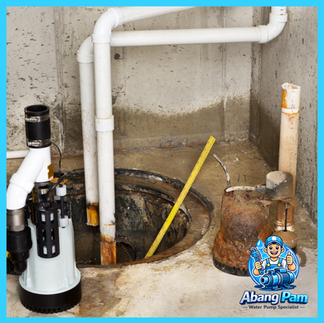


✅ Suitable for homes with low water pressure problems
✅ Stronger and more stable water flow
✅ More practical for showers, kitchen use, and washing machines
✅ A more reassuring choice for daily use
📞 Click here to ask about installation or inspection via WhatsApp!


Comments